Aayush Jagri
00%

Data depth and the hard problems beneath it are what hold my attention.

Make the data answerable.

I help organisations understand what their data can genuinely support — then engineer the data products, analytical models and BI needed to make that understanding dependable.

Data depth01
My work starts with the evidence, not the platform.I am most useful when the problem is deeper than a dashboard: unclear grain, fragmented sources, weak lineage, unreliable pipelines, inconsistent metrics, or a business question the current data cannot support.
Scroll
Data auditData engineeringAnalytics & BIDepth before breadthEvidence before assumptions
Perspective

Good analytics begins with knowing what the data can support.

Data volume is not the same as data usefulness. The decisive questions are structural: what exists, what one record represents, how often it changes, how sources relate, and where the evidence stops being sufficient.

What I care about

Depth before breadth. Evidence before assumptions.

I focus on the difficult part of data: understanding its structure well enough to make a sound decision about what should be built. Grain matters especially — because the level at which data is recorded determines which questions can be answered reliably.

The practical question

What can this data answer today — and what would have to change to make the unanswered questions feasible?

Technology should follow the evidence.

Cloud services, Spark, SQL, BI and ML are useful when they solve a defined problem. I prefer standards and explicit interfaces where they preserve ownership, portability and engineering control.

Audit · Engineer · Analyse · Explain
What I do

Three services. One specialism.

I work across the data lifecycle, but the purpose stays narrow: establish what is true, engineer what is needed, and make the resulting information useful and trustworthy.

01 / DATA AUDIT & ASSURANCE

Establish what is true before you build.

Assess the data estate and the path from source to decision. Determine what the organisation can reliably know, what it cannot yet know, and what would make the gap feasible to close.

  • Presence, availability & ownership
  • Grain, history & frequency
  • Fragmentation & interoperability
  • Lineage, quality & reconciliation
  • Feasible vs. currently unanswerable questions
02 / DATA ENGINEERING

Build the dependable path.

Design and implement the ingestion, transformation and storage patterns needed to make trusted data repeatable, observable and maintainable.

  • Batch & incremental pipelines
  • PySpark & SQL transformations
  • Data quality & reliability controls
  • Lakehouse / warehouse patterns
  • Portable, code-first engineering
03 / ANALYTICS & BI

Turn governed data into usable decisions.

Build analytical models and BI experiences that preserve business meaning, expose assumptions and give stakeholders a consistent basis for action.

  • Analytical data modelling
  • Power BI & semantic reporting
  • KPI and metric design
  • Customer & operational analytics
  • Decision-ready dashboards
WHERE I CAN HELPTypical triggers:
01Data exists, but confidence does not.
02A product or ML idea needs a data feasibility answer.
03Pipelines work, but are becoming expensive or fragile.
04BI numbers do not reconcile.
05A platform decision needs evidence before investment.
01 / Data audit & assurance

Understand the shape of the truth.

Before recommending a platform, dashboard or ML product, I examine the evidence underneath the request. Data is important; grain is what determines the answer.

What the audit establishes

The assessment connects technical reality to the questions the organisation wants to answer. It identifies useful evidence, ambiguity, fragmentation and the changes required to move from “cannot answer” to “can answer reliably.”

Output · evidence register + data map + findings + feasibility view + prioritised next steps
01 · PresenceWhat exists, where it lives, who owns it and how it can be accessed.
02 · GrainWhat one record represents and which calculations that level of detail can support.
03 · FrequencyHow often information arrives or changes, and whether that cadence fits the decision.
04 · FragmentationWhere information is split across systems, teams, files or definitions.
05 · InteroperabilityHow sources relate, what keys/contracts exist and where integration assumptions fail.
06 · FeasibilityWhat can be answered now, what cannot, and the practical path to make more feasible.
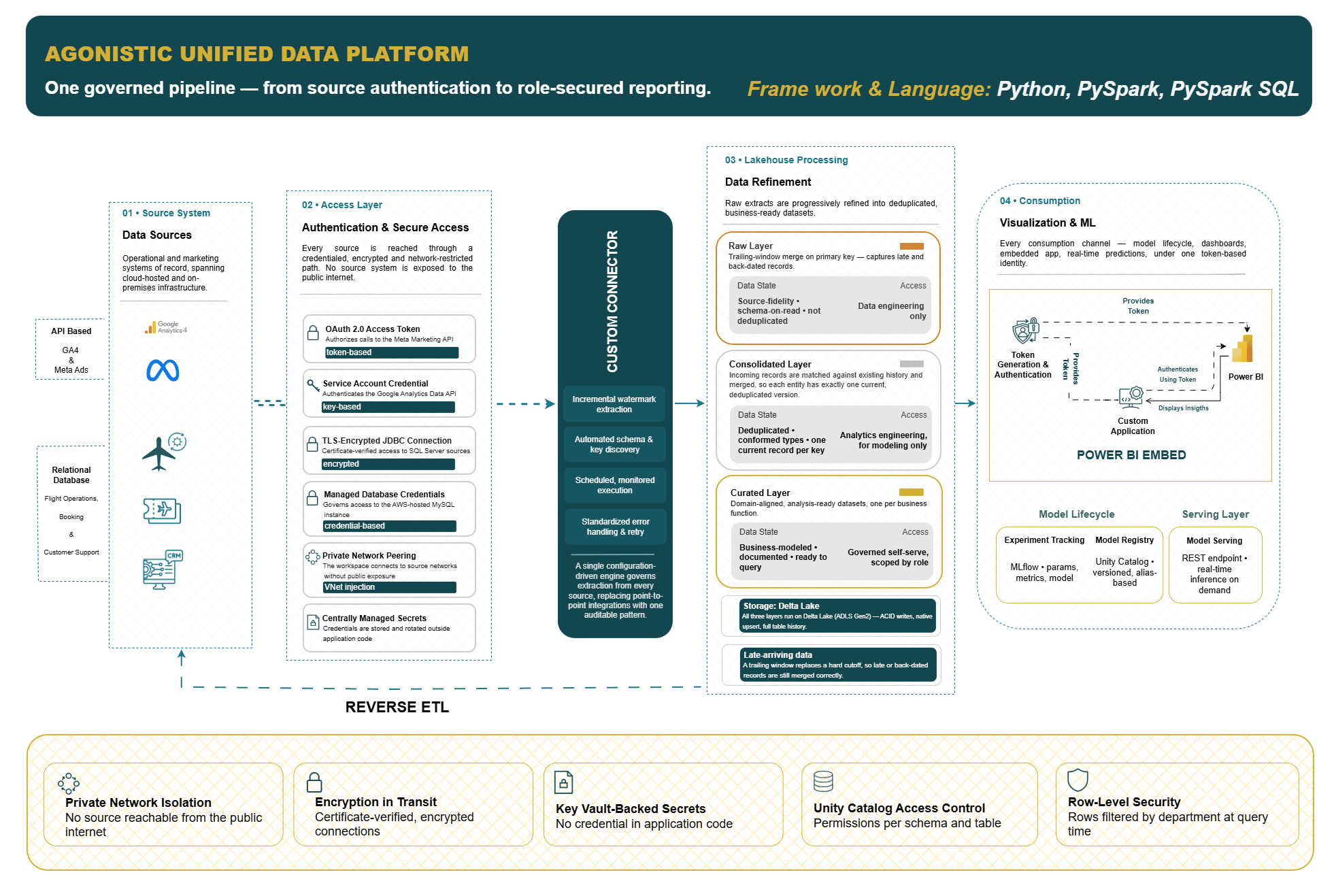
REFERENCE ARCHITECTURE / REAL PROJECT

Agonistic unified data platform.

From authenticated source access through incremental extraction, layered refinement, governed storage and role-secured consumption. The architecture is evidence of the design principle: vendors provide capabilities; the organisation retains the logic, boundaries and decisions.

Python / PySparkPySpark SQLDelta LakeGoverned accessPower BI Embedded
Agonistic unified data platform architecture showing source systems, secure access, custom connector, lakehouse processing and governed Power BI embedded consumption
Portable logic

Business transformations remain expressed in standard code and SQL.

Explicit boundaries

Source, processing, storage, governance and consumption have clear responsibilities.

Controlled dependency

Vendor services are selected for capability without hiding the architecture behind them.

Change remains possible

Interfaces, tests and documented logic preserve a practical path to evolve the platform.

Technical proof

Evidence after architecture.

Selected work shows how I approach difficult data problems: diagnose the constraint, design the response, deal with the hard parts, and measure what changed.

Data engineering · Cloud architecture
Lakehouse Architecture & Power BI Embedded

A governed path from AWS-hosted MySQL through Azure Databricks and Delta Lake into ML and secure embedded reporting.

~30% fasterETL / transformation processing
AWS MySQL · Azure Databricks · PySpark · Delta Lake · MLflow · Power BI Embedded
Open case study →
Source → ingestion → refinement → governance → consumption
01
Pipeline reliability
Change Data Capture & Incremental Processing

Replaced full-table reloads with change-aware ingestion and Delta Lake merge patterns so downstream marts stayed current.

Near real-timeanalytics with lower source-system load
PySpark · Delta Lake · Databricks Workflows · SQL
Open case →
02
Automation · Data movement
Automated Data Lake & FTP Integration

Scheduled file movement between Azure Data Lake and external FTP endpoints, with Azure Key Vault handling credentials.

Manual steps eliminatedauditable scheduled process
Azure Data Lake · PySpark · Azure Key Vault · Secure FTP
Open case →
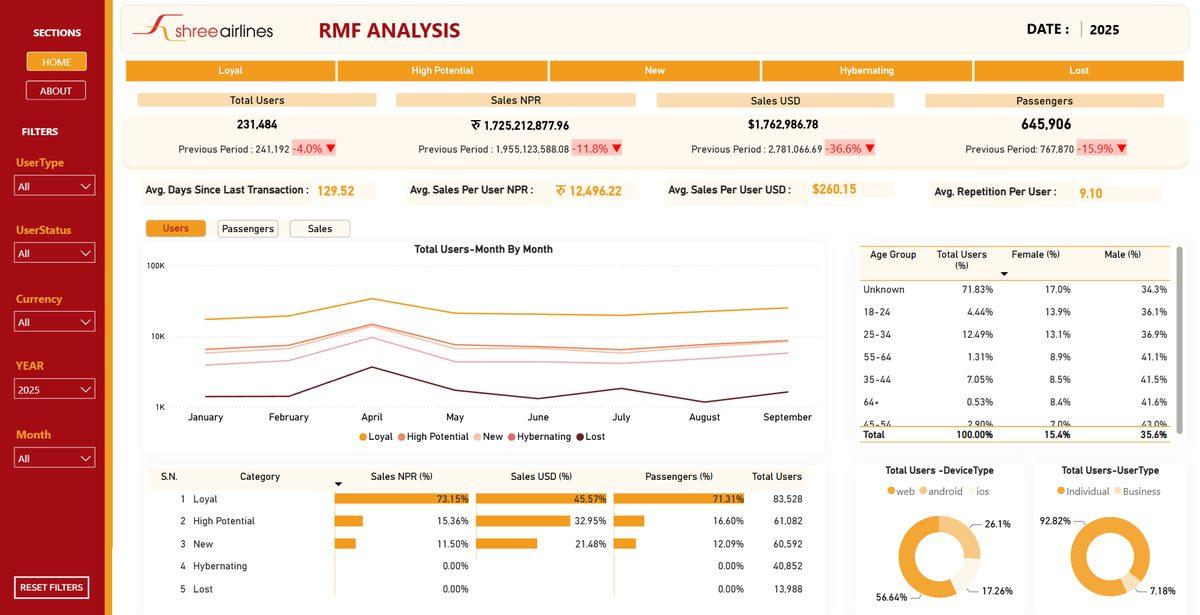
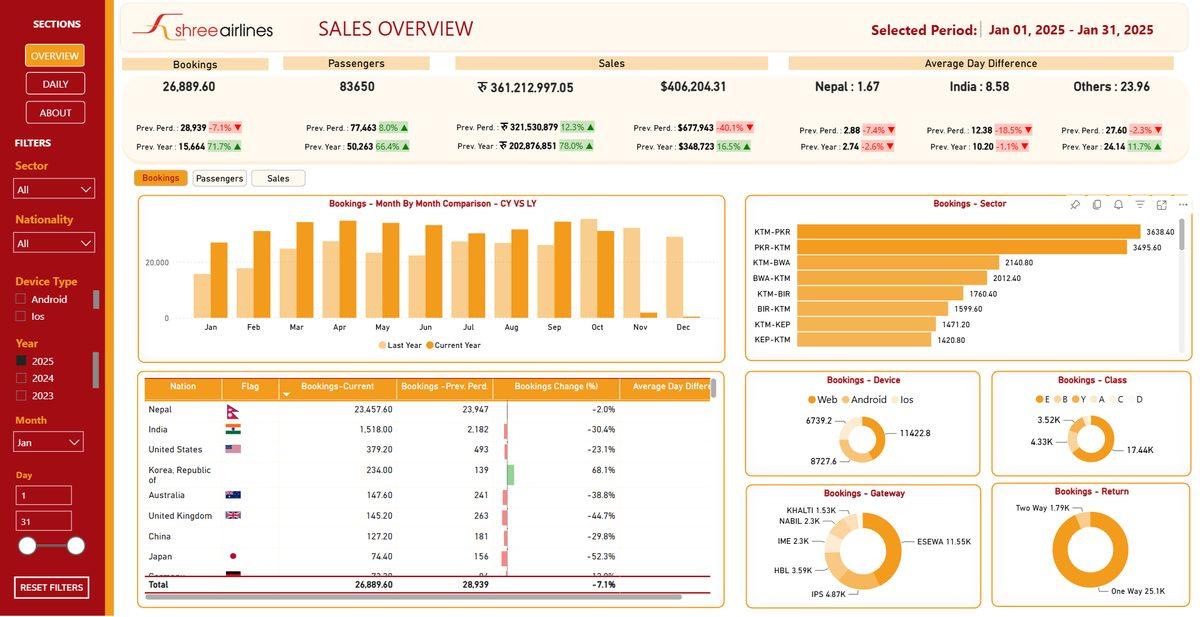
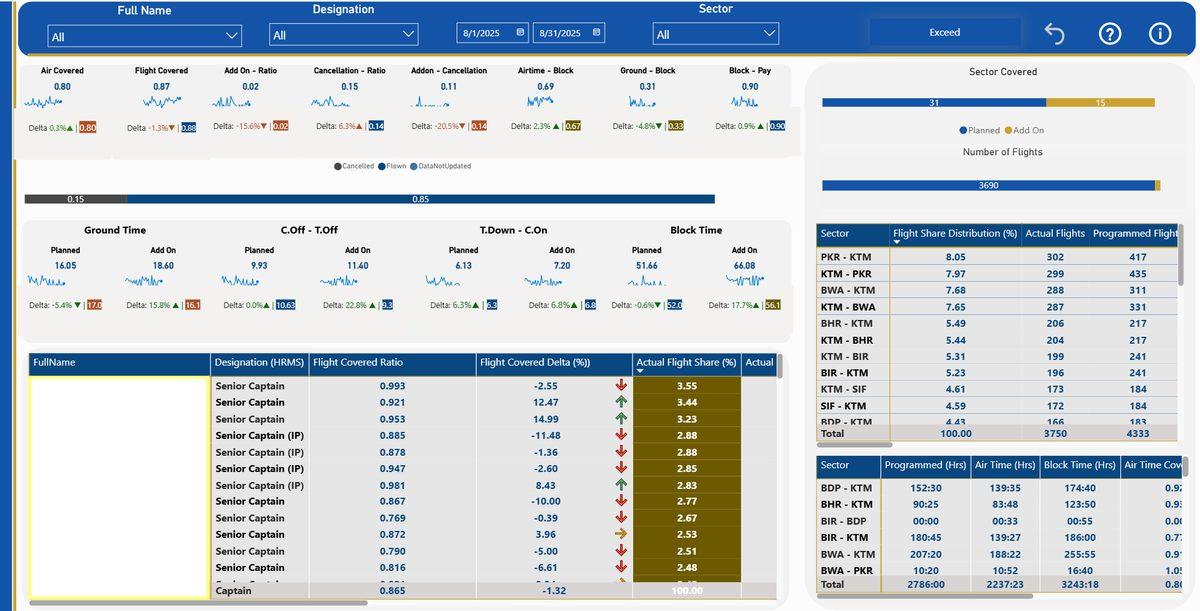
Analytics & BI evidence
Customer segmentation and RFM analytics dashboard
Customer analytics
RFM Segmentation

Customer value and lifecycle segments consolidated into a reusable analytical model.

Open case →
Sales and booking analytics dashboard
Sales analytics
Sales & Booking Analytics

Bookings, passengers and sales unified into a comparable reporting model.

Open case →
Flight operations and crew performance dashboard
Operations analytics
Flight & Crew Performance

Operational coverage, time and crew performance brought into one drillable view.

Open case →
DATA QUALITY
ROOT CAUSE
Inventory baseline & replenishment
Supply chain · Data quality
Negative Quantity Investigation

Traced negative inventory to source, reconstructed history and established a reliable baseline.

Open case →
How I work

Sequence matters. Each step should earn the next.

I prefer a pragmatic progression: understand the question, inspect the evidence, make the decision, then build only what the evidence justifies.

01

Frame

Clarify the decision, constraint and definition of success.

02

Audit

Inspect presence, grain, lineage, quality, frequency and feasibility.

03

Decide

Separate what should be fixed, engineered, sourced or deferred.

04

Engineer

Build the reliable path, controls and analytical models.

05

Enable

Expose governed analytics and BI with definitions people can trust.

Point of view

More data is not the goal.
Useful, defensible data is.

The hard problems are usually beneath the interface: ambiguous definitions, unsuitable grain, missing history, fragmented sources, unreliable movement or a platform that has become difficult to change.

“The deeper the understanding of the data, the fewer assumptions the system needs to make.”

I prefer code-first, standards-based engineering where it improves ownership, testing and portability. The aim is not to avoid vendors; it is to avoid making the vendor the owner of the reasoning.

Start a consulting conversation

Bring the data problem.

If the organisation is unsure what its data can support, reporting is unreliable, pipelines are becoming difficult to maintain, or a platform decision needs stronger evidence, we can start with the problem.

Not ready to dive into specifics? Pick “Coffee chat” below for an informal introduction instead.

Hourly engagements from $25/hour (USD) · project work scoped and quoted separately.

Your details are used only to reply to you — never shared, sold, or added to a mailing list.

Nepal · Remote consulting